Grey
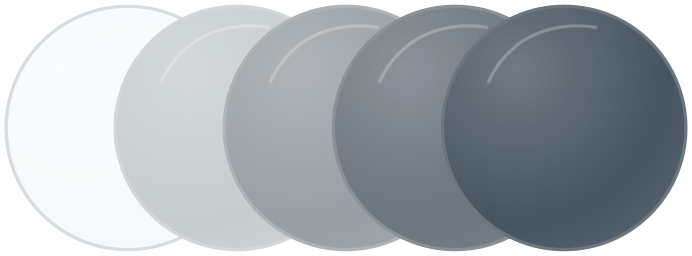
ClearDark
Refractive indices
1.50 · 1.56 · 1.60 · 1.67
Lenses that adapt to light
The tint
follows your day.
Clear indoors, darker in sunlight. The same pair of glasses adapts to changing light throughout the day. With built-in blue light filtering, even in the clear state.

Your options
Grey, brown or green. The charts show the transition from clear to dark for each tint.
ClearDark
Refractive indices
1.50 · 1.56 · 1.60 · 1.67
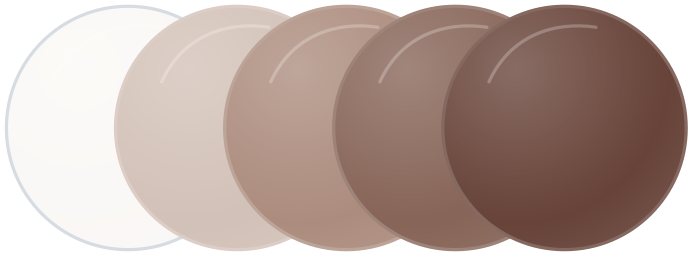
ClearDark
Refractive indices
1.50 · 1.56 · 1.60 · 1.67
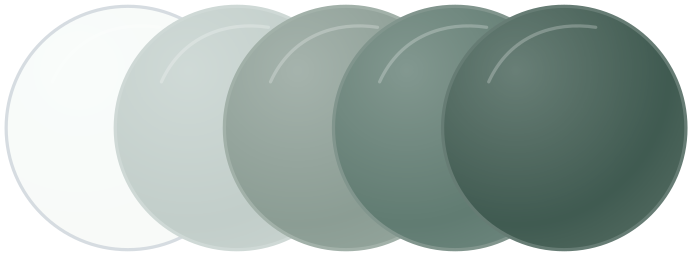
ClearDark
Refractive indices
1.56 · stock lens
Technology in everyday life
Indoors, the lenses remain clear for everyday vision at home, at work and while studying.
The tint adapts as lighting conditions change. Darkening and returning to clear reduce the need to switch glasses frequently.
In sunlight, the lenses darken and reduce glare from bright light. They also provide protection against ultraviolet radiation.
Colours and darkening
The degree of darkening varies by refractive index. Catalogue values are shown for a temperature of 23°C.
| Index | Minimum darkness | Maximum darkness |
|---|---|---|
| 1.50 / 1.56 | 5% | 90% |
| 1.60 / 1.67 | 8% | 88% |
Values indicate the level of darkness. Green is only available in index 1.56 as a stock lens.
Beyond a change of tint
Photochrome lenses have built-in blue-light filtering that also works indoors, while they remain clear. During everyday use in front of a computer or other screens, this function does not require the lens to darken.
Clear lens
Blue-light reduction in the region 400–455 nm, even while the lens remains clear.
Slightly activated lens
Blue-light reduction in the same region when the lens is lightly activated, with light transmittance of 80%.
Measurements on an index 1.60 lens, with a centre thickness of 2 mm, in the 400–455 nm range.
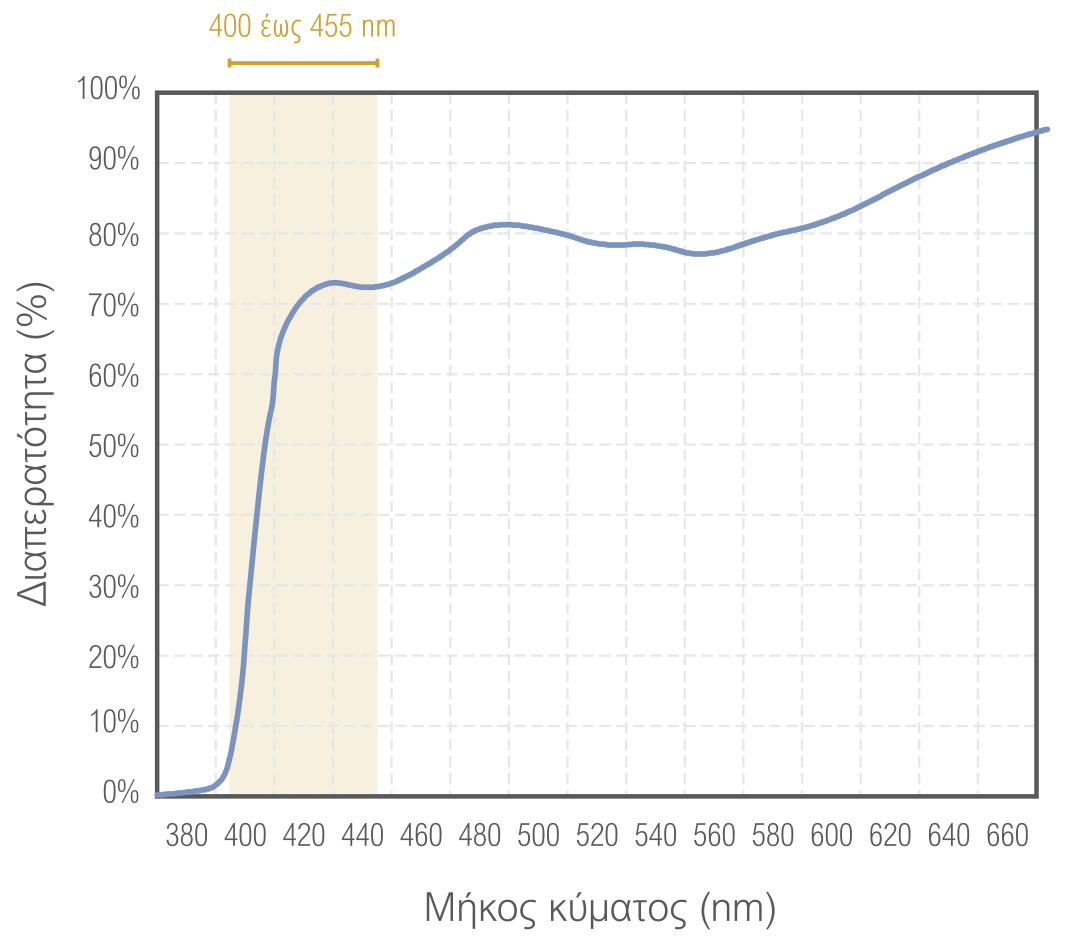
Light after the lens
The curve shows the percentage of light passing through the lens at each wavelength.
Photochromic lenses contain light-sensitive molecules that react to ultraviolet (UV) radiation by temporarily changing their structure. This makes the lenses darken in sunlight and gradually return to their clear state when UV exposure decreases, such as indoors.
Scratch resistance depends on the lens material and its hard coating. The photochromic function controls the change in tint. Your optician can recommend the right combination of material and coating, along with suitable care instructions.
Photochrome lenses can support many everyday transitions between indoor and outdoor spaces, reducing the need to switch glasses. For long periods in bright sunshine, certain sports or activities with strong reflections, a separate pair of sunglasses remains useful. Your optician can advise you according to how you use your glasses.